Amsterdam Valuation Report Contents: A Practical Reading Order
Read an Amsterdam valuation report in a useful order, from assignment and property rights through comparable evidence, conclusion and limitations.
TL;DR
Start with the assignment, recipient and value date. Check that the property description and rights match the home. Review how the inspection and comparable properties support the analysis. Read the conclusion together with assumptions and limitations, then ask the recipient whether the report fits its own file.
If the purpose, recipient or timing is still unclear, share your Amsterdam report question so we can help you frame the next step. Keep passports, bank details, contracts and other private documents out of the public form.
Amsterdam valuation report contents in one reading path
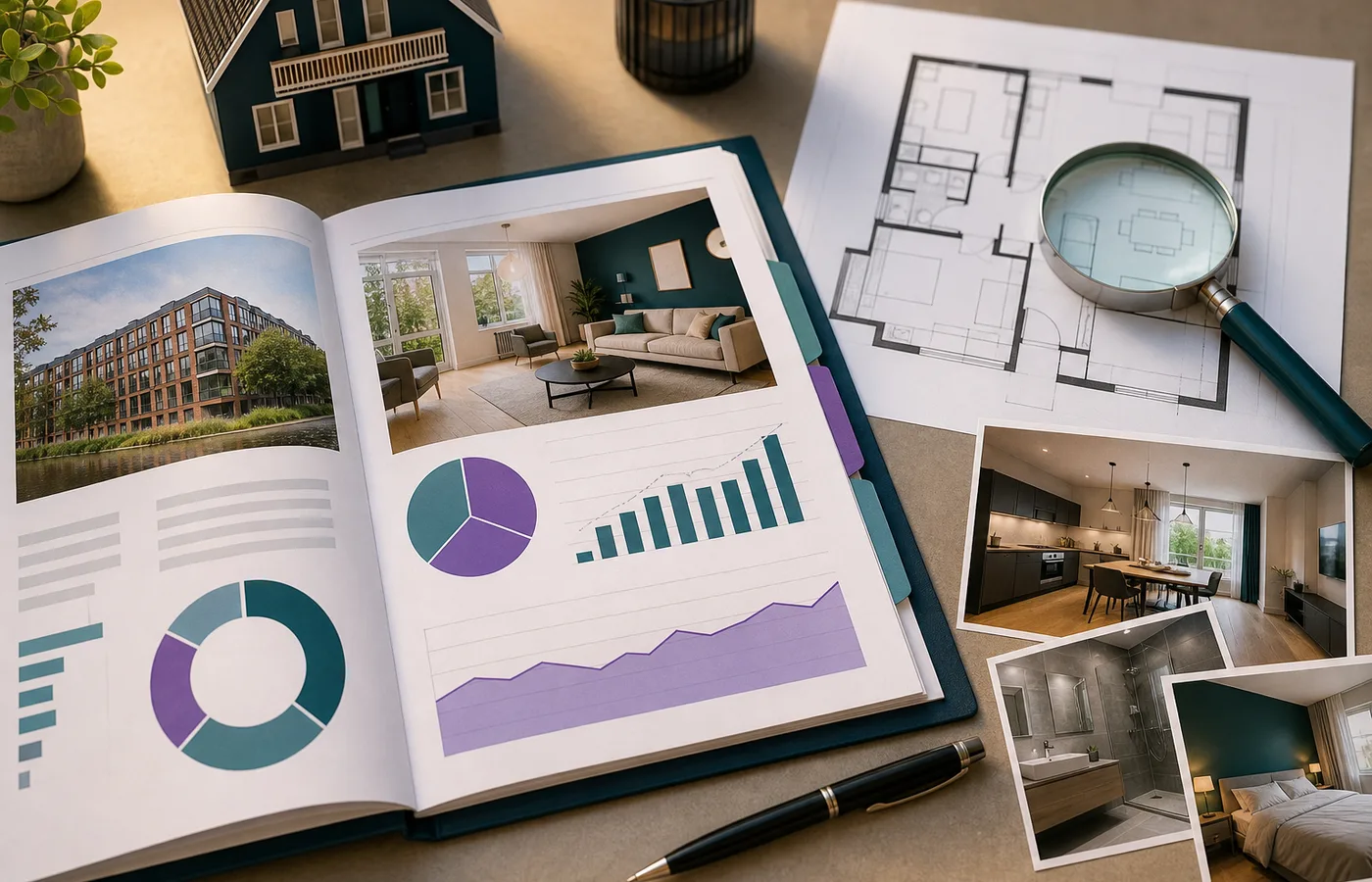
Amsterdam valuation report contents make sense when you read the document as a chain: assignment, property identity, rights, inspection, evidence, analysis, conclusion and limitations. The exact headings can differ by purpose and recipient. The reading sequence helps you test whether the report answers the question you commissioned it to answer.
If you are checking a report after delivery, compare the assignment, value date and limitations with the valuation report sections before relying on the conclusion.
If the assignment requires a registered professional, keep the signatory’s NRVT registration beside the recipient’s requirements before you compare the report.
If you are checking a report after delivery, compare the assignment, value date and limitations with the valuation report sections before relying on the conclusion.

Who uses these report checks
Use these report checks if you have received a report for a purchase, sale, mortgage, inheritance, division or another property decision. It is also useful before commissioning a report because it helps you define the output and the questions you want answered.
How should you read the report?
Read the purpose and value date before the final value. Then check the property facts and rights. Move on to the inspection and comparable evidence, read the reasoning, and finish with limitations and recipient conditions. This order keeps a striking conclusion from pulling you away from the evidence that supports it.
Decisions at a glance
Look for these document blocks:
- assignment and value question;
- property identity and rights;
- inspection, layout and condition;
- comparable evidence;
- analysis and assumptions;
- conclusion and value date;
- limitations, uncertainty and recipient use.
The labels may vary. The function of each block matters more than the heading chosen by the report model.
Checks before you rely on a report
The boundary matters because a report is not a universal property file. A lender may apply its own acceptance rules. A municipal WOZ assessment follows a different process. A building survey answers construction questions that a valuation inspection may leave outside scope. When you receive several value figures, compare market value, WOZ value and appraisal value before treating them as interchangeable.
Look for ownership, apartment rights, leasehold and restrictions that belong in the assignment. Amsterdam leasehold can bring ground-lease documents and payment terms into the file. When leasehold affects your report, compare the interest being valued with Amsterdam leasehold records before you rely on the payment terms.
A clear valuation process keeps purpose, inspection, evidence and reporting in one sequence.
For a mortgage file, NHG valuation checks identify recipient and acceptance review conditions that may affect acceptance.
A quote is easier to compare when valuation costs are read together with scope and delivery conditions.
The final report should make the property appraiser’s role and the evidence trail visible to its recipient.
When the property brief is an apartment file, an Amsterdam apartment property appraiser shortlist adds a focused comparison question beside the broader assignment.
What an appraisal report is designed to do
A valuation report records a professional opinion for a defined purpose. It gives you a description of the property and the rights considered, the evidence used, the reasoning applied and the limits that qualify the conclusion. The report is a decision document with a boundary.
Why the order matters
An amount at the end of the report has no useful meaning without purpose and date. The same Amsterdam home can be assessed at different times and for different decisions. A comparison that looks close on a map can differ in tenure, size, layout, condition or transaction conditions.
Read the report in order and keep a three-column note:
Property fact
- Evidence or record
- Plan, deed or inspection observation
- Question to discuss
- Does it match the home?
Comparable evidence
- Evidence or record
- Sale or property record
- Question to discuss
- Which difference matters?
Assumption or limitation
- Evidence or record
- Missing record or stated boundary
- Question to discuss
- Who needs to resolve it?
This short evidence map turns reading into a traceable check. It gives you a way to record what matches, what needs a question and what is missing.
The entities inside the document
Assignment and value question
Find the purpose, recipient, value concept, value date and assumptions. Ask whether the report has been commissioned for the decision in front of you. If the recipient changed after the instruction, confirm whether it can rely on the document.
Property identity
Check address, property type, apartment or ownership right, size information, floor, outdoor space and included areas. A storage room, parking place, annex or shared area needs a clear status. If the report describes a different layout from the current home, raise the factual question first.
Rights and tenure
Confirm whether the report concerns full ownership, an apartment right or leasehold. Check the deed, VvE material or ground-lease conditions against the interest named in the assignment.
Inspection and condition
The inspection section can describe layout, visible condition, finish, installations, access and surroundings. Check which areas were seen and which were inaccessible. The report’s inspection is evidence for the valuation. A building survey is the place for a deeper defect investigation.
Comparable evidence
Review each comparable for location, property type, size, layout, condition, finish, tenure and timing. The report should explain material differences. A nearby address is useful only when the property interest and other facts support the comparison.
Analysis and assumptions
Look for the bridge from facts to conclusion. The analysis may explain adjustments, weighting, uncertainty and assumptions. Ask which input has the greatest influence on the reasoning and which item is less certain.
Conclusion and limitations
Read the value conclusion with its date and definition. Then read limitations, missing information and intended use. A clear limitation helps the recipient decide what further check is needed. A report can be well written while still being unsuitable for a different purpose.
Related questions to settle
Match related topics to the question:
Keep the question attached to the report purpose. If you are looking for a missing leasehold term, ask about the supporting record; acceptance review questions belong with the lender.
A practical review after delivery
Step 1: verify identity
Compare address, property type, floor, size, rights and included areas with your own records. Record each mismatch without rewriting the report yourself.
Step 2: verify the evidence trail
Check the inspection description, documents and comparable homes. Ask how the report treated a missing plan, planned work, VvE project or leasehold condition.
Step 3: verify use
Ask the intended recipient whether the report format, date, acceptance review and signatory meet its file conditions. The appraiser can explain the report; the recipient decides whether it can be used.
Step 4: send one clear question list
Separate a factual correction, a request for explanation and a new valuation question. This makes it easier to decide whether the follow-up belongs to the existing assignment.
Common reading mistakes and edge cases
Starting with the amount: the conclusion needs purpose, evidence and date around it.
Treating the WOZ value as the same document: WOZ is a municipal assessment with its own date and tax purpose.
Ignoring the rights section: ownership, apartment rights and leasehold can change the interest being valued.
Mixing planned and completed work: a future renovation needs a different status from an inspected improvement.
Assuming a report is a building survey: valuation evidence and defect investigation have different scopes.
Assuming a recipient will accept it: ask the recipient before relying on the report in a mortgage or administrative file.
A simple report-reading tool
Create a copy of the report index or section list and mark each block as “matches”, “question” or “missing”. Keep the relevant plan, deed, VvE record or instruction next to the note. This gives you a factual conversation with the appraiser and recipient.
Questions you may have
Is every Amsterdam report organised this way? No. Models vary by purpose and recipient. The named blocks describe the questions to find, not a universal page count.
Where should I start if the value seems wrong? Check purpose, date, property identity and rights first. A disagreement with the amount may begin with a factual mismatch or a different value question.
Can I ask for a report correction? Send a clear factual question to the report author and ask the recipient how it wants the correction handled.
Who decides if the report is accepted? The report recipient, such as a lender, applies its own file conditions.